The 70% Rule: Why "Good Enough" Makes You a Better Artist
- Elina Zhelyazkova
- 2 comments
Being an artist and a perfectionist is a tough combo. Especially when you’re still learning (which never really stops, actually, but you get my point). It’s one thing to see room for improvement and to have a clear vision of how you want your work to look. It’s another to scrutinize and never be happy with what you created.
I’ve been back and forth, trying to find the right balance between the two for years. I haven’t mastered it, but something that helped me immensely was the 70% rule.
In this post, I’ll talk more about it, what it is and how it has helped me feel much better about my art and my progress.
Let’s dive in.
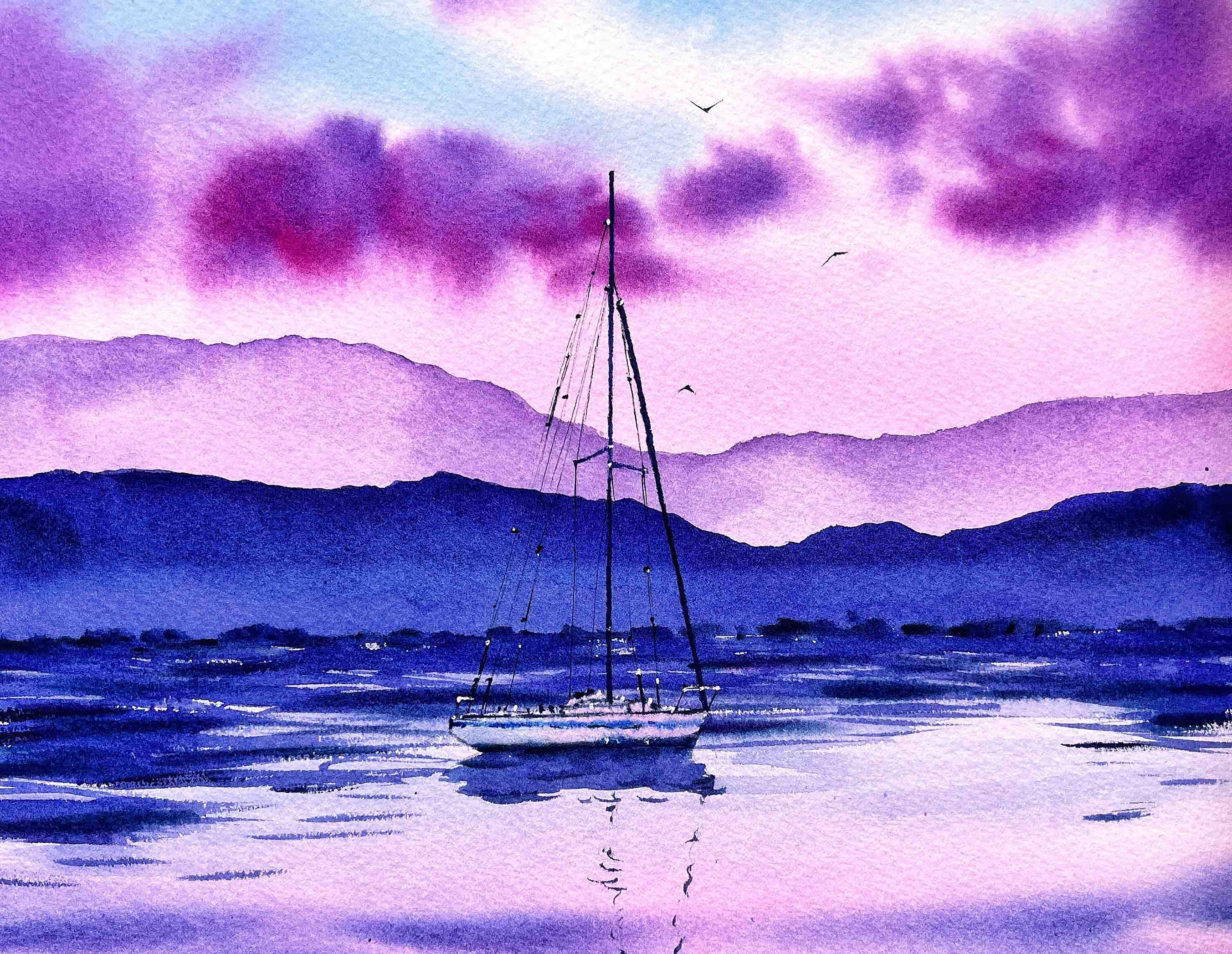
One of my favorite paintings. Definitely not perfect, but successful in all the ways that matter to me.
What is the 70% rule?
The 70% rule (or whatever percentage feels right to you) tells us that being roughly 70% happy with your work is good enough.
The exact number doesn’t matter. The principle does.
How does that help us as artists?
It alleviates the pressure of being 100% perfect all the time (which, let’s be honest, is impossible).
It makes us focus on the good things, the things we like about the artwork.
-
It’s not avoidance. We acknowledge that there are still things that could be improved and are not exactly what we would like to see, so that we can mentally store them for the next painting session and work on them then.
The 70% rule doesn't mean accepting poor work or lowering your standards. It means acknowledging what’s good.
It means accepting that we are artists, imperfect human beings, and not every piece we create can be as good as the previous one or as perfect as we imagine it.
It helps us let go of perfectionism, which we all know is the enemy of good enough.
The goal isn't to create one perfect painting. The goal is to create enough paintings that your skills naturally improve over time.
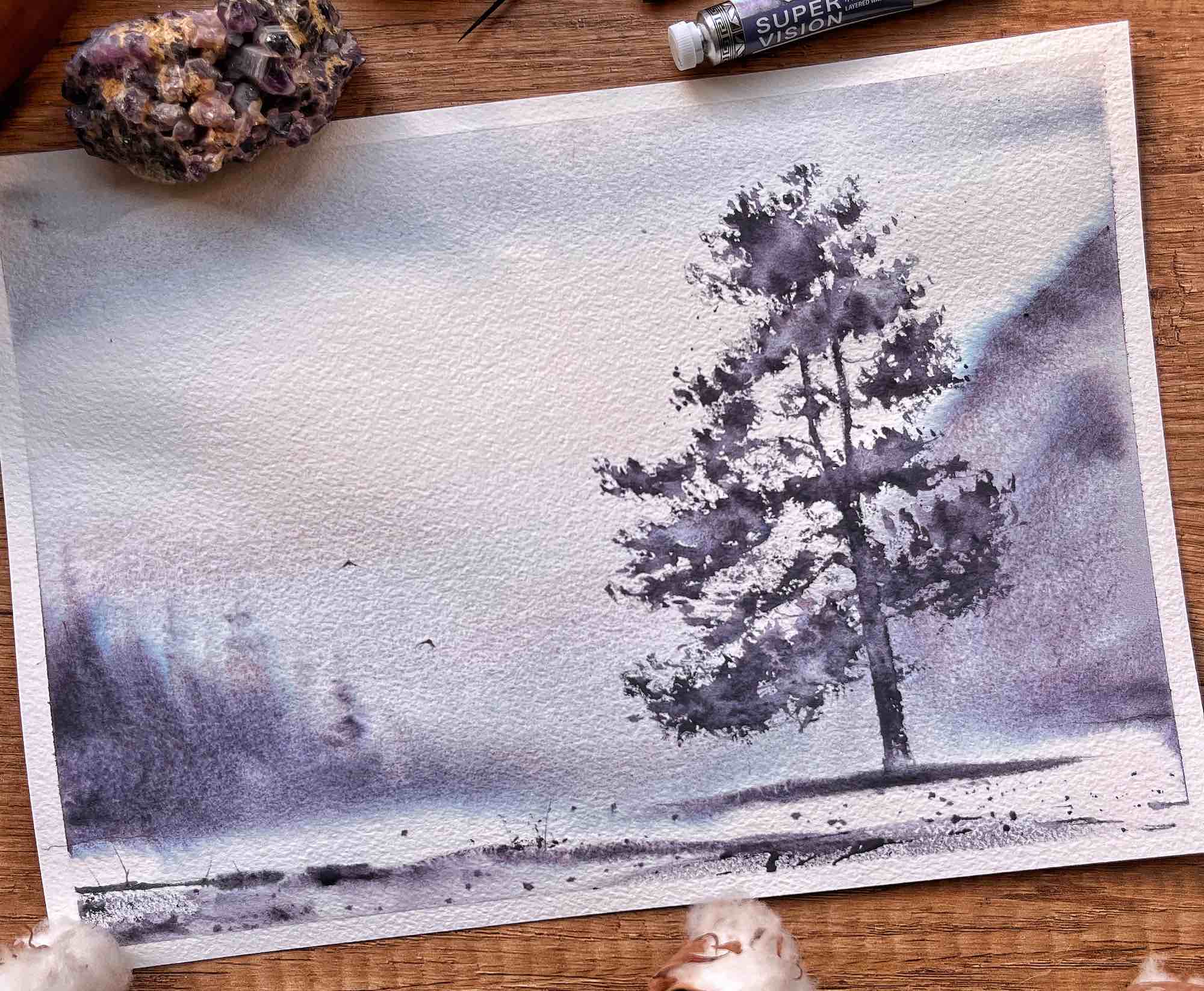
I remember wanting to add more details here. Looking back, I'm glad I didn't.
The lesson from a famous photography story
I love and often share the famous story often attributed to photography professor Jerry Uelsmann. It tells that he divided his class into two groups. To the first group, he gave the task of creating a single perfect photograph. The other group had to produce as many photographs as possible, no matter the quality. By the end of the semester, the strongest work came from (you guessed that right) the students who practiced and experimented the most.
What I love about this story is that the students in the quantity group didn't become better because they cared less. They became better because they spent more time practicing, experimenting, failing, and learning.
Every painting teaches us something. The faster we move on to the next one, the more opportunities we give ourselves to improve. Chasing perfection is futile. You can never fully achieve it. There is always something to improve. It can drive you down the rabbit hole of overanalyzing and focusing on imperfections instead of moving on to create the next piece, and then the next, and eventually becoming better at what you do.
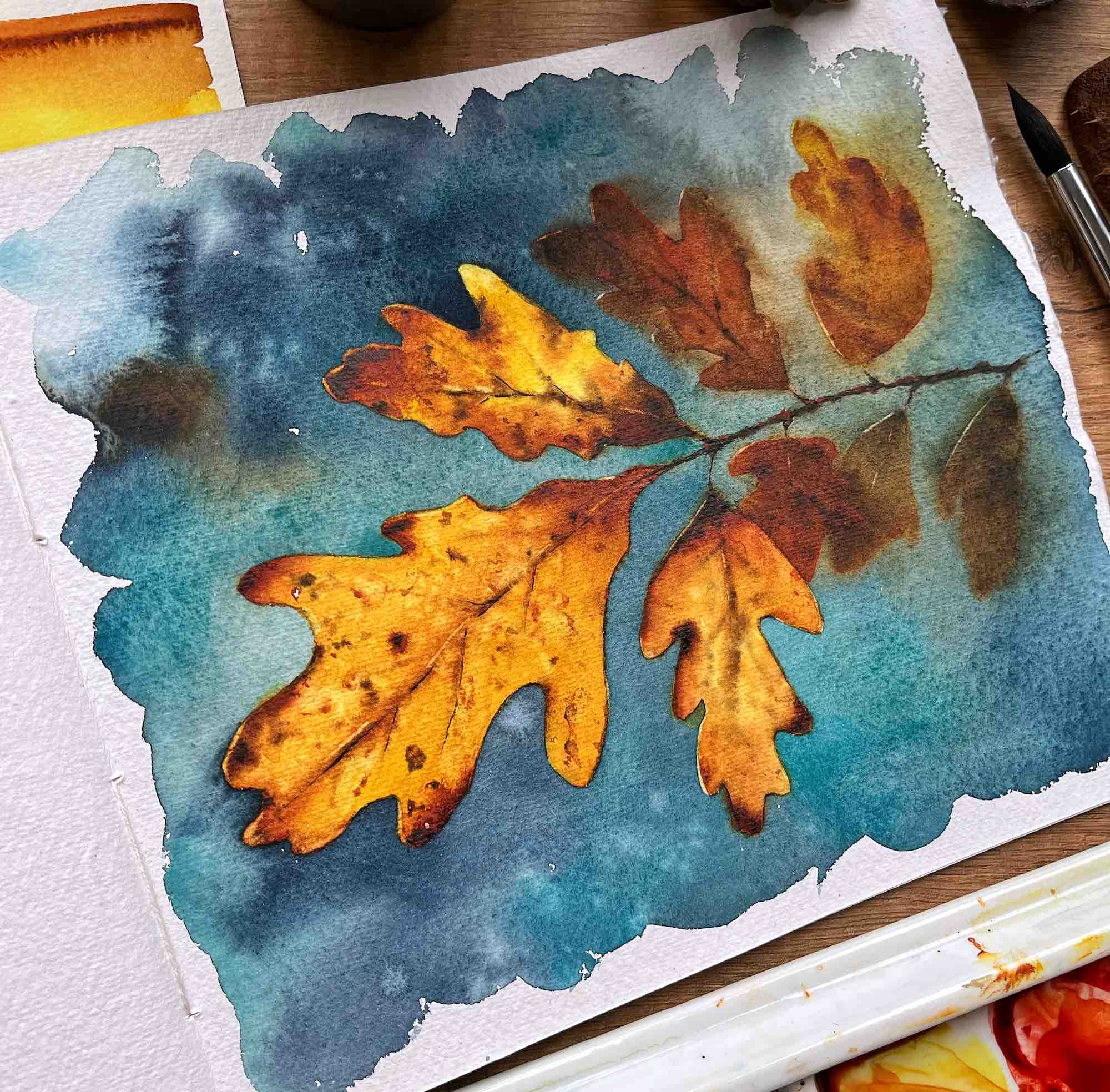
Watercolor often becomes more interesting when we leave these accidents alone.
Why the 70% rule works so well with watercolor
The 70% rule goes extremely well with watercolor.
It’s a medium that favors spontaneity and boldness instead of calculated precision and orchestrated brushstrokes. The most fascinating watercolors I’ve seen have fresh washes, loose edges, spontaneous blooms - all those things that we often find irresistible to correct, to go over with the brush just one more time, to “perfect”.
But watercolor often looks best before we've overworked it. Many of the qualities we love in it disappear when we try to control every detail.
The (hidden) cost of chasing 100%
When we're aiming for perfection:
we hesitate more
we take fewer risks
we spend more time correcting
we finish fewer paintings
And fewer finished paintings means slower growth.
The (surprising) math of improvement
Imagine creating 20 paintings that you're 70% happy with versus creating 4 paintings that you're trying to perfect.
Which artist gets more practice? Which artist learns faster?
Growth comes from repetition, not perfection.
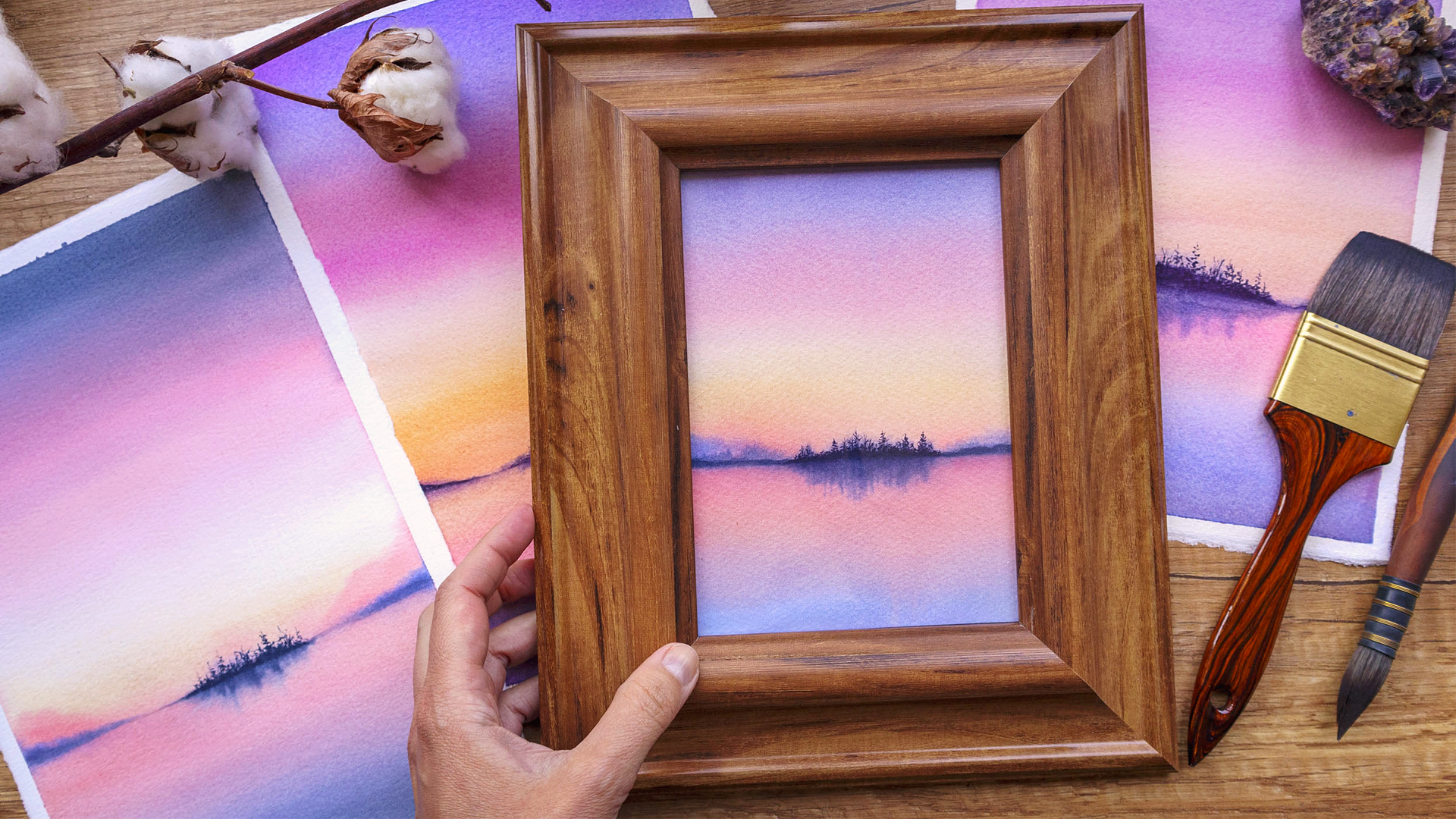
Progress often comes from volume. Twenty imperfect studies can teach us more than one painting we endlessly analyze.
(full tutorial for this pastel sunset here)
Knowing when to stop
The 70% rule also means stopping before you overwork your painting in the process of chasing perfection.
It’s one of the hardest things to learn, I’ve found - knowing when to stop.
I haven’t mastered that either, but here are some tips that I’ve found helpful:
Step away for 10 minutes. Sometimes I force myself to do it when I start feeling like I’m overworking a piece.
Take a photo of the painting. It helps when you see it small and contained in your palm.
View it from across the room. Same principle.
-
Ask yourself “Am I improving this painting, or am I trying to cover the imperfections?”
Final thoughts
Some of my favorite paintings are not the ones I worked on the longest. They're often the ones where I accepted the imperfections along the way and stopped before I overworked them. Sometimes the freshness, energy, and feeling of a painting matter far more than whether every detail is exactly right.
The next time you're tempted to keep fixing a painting, ask yourself: “What if it's already done?”
2 comments

This is a fantastic article for someone like me who is obsessed with creating the perfect painting, I loved it! That sentence, "Growth comes from repetition, not perfection" is particularly striking. I hope—and I know—it will help me in my future work! Thanks a lot, Elina. <3
Aww, thank you so much for reading it and for leaving such a lovely comment ❤️ It makes me so happy to know that it resonated with you! I know how hard it can be to let go when you want every painting to be perfect, so I hope the 70% rule will help you enjoy the process a little more too. And I have no doubt your future work will benefit from it 🥰